 0800 220 009
 Back to Blogs
 Back to Blogs
Gran Turismo History: Secret Porsches, Nissan GT-R and the Stories Behind the Legend
 October 21, 2026
 MotorShare Team
 a day
Gran Turismo: The Incredible Stories Behind the Game That Changed Car Culture
Did you know that the team behind Gran Turismo helped design the performance display inside the Nissan GT-R R35? Yes, the developers of a PlayStation racing game actually worked on the dashboard of a real Japanese supercar.

No? Well, perhaps you've heard about Kazunori Yamauchi, the creator of Gran Turismo, who loved his Porsche 911 GT3 so much that the developers created a model of it for Gran Turismo 3, despite the game not having the official Porsche licence. And here's the really interesting part: the game's iconic red cover even features what looks like an upside-down Porsche 996 headlight. Yes, really. Take a closer look.

You didn't know that either? Then this article is definitely for you. Because Gran Turismo is much more than a racing game. It's an automotive legend packed with extraordinary stories, secret cars, obsessive developers, brilliant engineering and a few spectacular disasters along the way. And some of the best stories happened nowhere near a PlayStation.
Before Gran Turismo, There Was Best Motoring
To understand the spirit of Gran Turismo, we need to travel back to Japan in the late 1980s, when an automotive video magazine called Best Motoring was doing something that would make most modern insurance companies extremely nervous. Its philosophy was simple: take some of the most exciting cars on the planet, put professional drivers behind the wheel and let them race each other. Not necessarily cars from the same category, either. A Ferrari F40 against a Nissan Skyline GT-R? Absolutely. A Honda NSX battling a Porsche 911 Turbo? Why not? The whole point was to discover what would happen.


And these weren't gentle demonstration laps. Best Motoring's famous Battle format brought together seriously talented racing drivers who pushed incredibly valuable road cars to their limits, often with very little space between them. Watching those old races is still fascinating today. No computer-generated drama or carefully rehearsed overtakes, just extraordinary cars being driven unbelievably hard. It's difficult to watch a field of Japanese sports cars chasing a European supercar around Tsukuba without thinking about Gran Turismo.

One of Best Motoring's biggest personalities was Keiichi Tsuchiya, better known as the Drift King. Famous for his extraordinary car control and his beloved Toyota AE86, Tsuchiya became a major figure in Japanese performance culture. His driving helped inspire Initial D, the legendary street-racing manga and anime, and he later advised its animated adaptation. Add Best Motoring's touge battles on twisting mountain roads, and you begin to recognise many of the ingredients that made Gran Turismo so captivating: extraordinary driving, unusual car comparisons and a genuine fascination with what makes every car different.

The Racing Game Sony Almost Never Made
The man behind Gran Turismo is Kazunori Yamauchi, a Japanese developer whose passion for cars was matched by his love of video games. In the early 1990s, he had a rather ambitious dream: creating a driving simulator where cars actually behaved like their real-world counterparts. That sounds perfectly normal today, but back then most console racing games were firmly in arcade territory. You could throw a car into a corner at ridiculous speeds, bounce off a wall and continue like absolutely nothing had happened. Yamauchi wanted physics, weight transfer, mechanical differences and a proper sense of driving.

Sony wasn't immediately convinced that a serious simulator was the ideal project for its upcoming PlayStation. So Yamauchi and his team first worked on Motor Toon Grand Prix, a colourful cartoon racing game released in Japan in 1994. It was a much easier concept to present, but it also helped the developers gain experience with three-dimensional racing games. Yamauchi later explained that the foundations of Gran Turismo were being developed during this period. Essentially, he found a way to work towards his dream while delivering a more conventional game first.
After years of development, Gran Turismo finally arrived in Japan on 23 December 1997. Instead of immediately throwing players into the world's most expensive supercars, it let them begin with an ordinary second-hand vehicle, complete licence tests, earn credits and gradually upgrade their machinery. Suddenly, buying a new exhaust or improving a suspension setup could feel just as exciting as winning a race. It was an entirely different way of experiencing automotive culture through a video game.


The game was an enormous success, eventually becoming the best-selling title on the original PlayStation. Think about the competition for a moment: Crash Bandicoot, Final Fantasy, Metal Gear Solid, Tekken and Tomb Raider were all part of that console generation. Yet a relatively serious driving simulator managed to outsell them individually. Sony's risky automotive experiment had turned into one of its biggest franchises.
The PlayStation Golden Years: Strange Cars, Broken Games and a Secret Porsche
Gran Turismo 2: When Absolutely Anything Could Become a Race Car
When Gran Turismo 2 arrived in 1999, Polyphony Digital took everything players loved about the original and multiplied it. The car selection expanded enormously, with hundreds of vehicles ranging from everyday hatchbacks to some truly ridiculous racing machines. One of the most memorable was the Renault Espace F1, a family people carrier transformed into a Formula One-inspired monster with a V10 engine. Then there was the Suzuki Escudo Pikes Peak, an extreme hillclimb machine with enormous wings and performance that made it feel almost unstoppable. This was the genius of Gran Turismo: it made you excited about cars you might never otherwise have discovered.


Unfortunately, the game also contained one of the most frustrating bugs imaginable. Some early versions of Gran Turismo 2 made it impossible to achieve 100% completion. Players could finish every race and championship yet remain stuck around 98.2%. The reason was particularly annoying: certain events had been removed during development, but the completion calculation hadn't been properly updated. In a game where collecting cars and completing challenges could consume hundreds of hours, discovering that the final few percentage points simply didn't exist was quite the Christmas present.
Gran Turismo 3: The Porsche Hidden Inside a Game Without Porsche
The jump to PlayStation 2 created an entirely new challenge. Cars could now be modelled with far more detail, but that also meant considerably more development time. Gran Turismo 3: A-Spec arrived in 2001 with fewer vehicles than its predecessor, yet the graphics were stunning for the period. Realistic reflections, lighting and carefully modelled bodywork made it feel like the future of racing games. But hidden deep inside its data was a particularly interesting surprise.

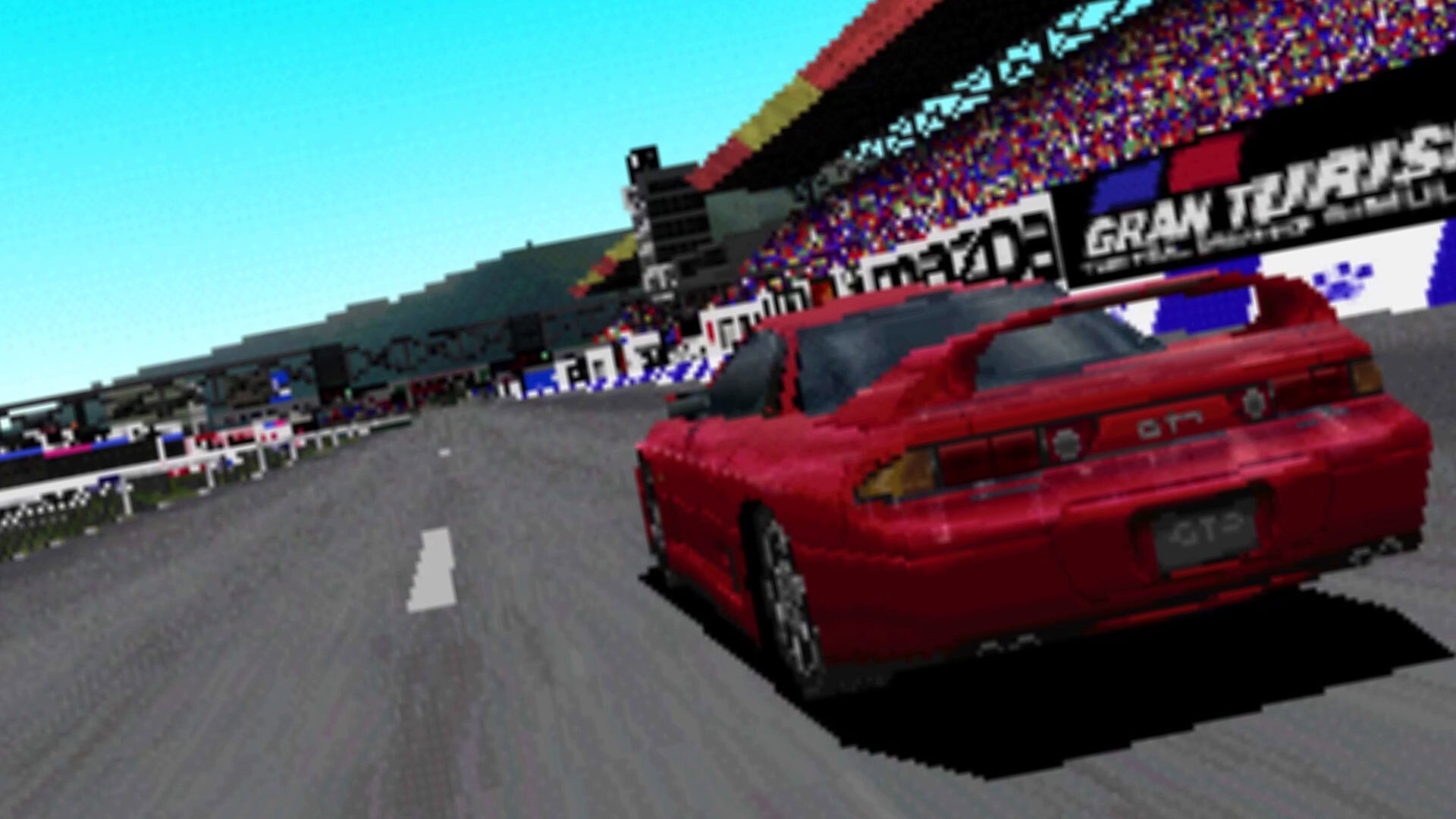
Yamauchi owned a Porsche 911 GT3 from the 996 generation, a car he was apparently particularly fond of. The trouble was that Gran Turismo didn't have the official Porsche licence at the time. That didn't prevent the team from creating an unused Porsche GT3 model, which remained hidden in the game's files. Players later discovered it and found ways to access it through modifications. In other words, the creator of one of the biggest racing games in the world had a Porsche model hidden in a game that wasn't officially allowed to offer Porsche.
And then there's the famous red cover. What looks at first like an abstract shape is widely recognised by enthusiasts as an upside-down Porsche 996-style headlight. The precise intention behind the artwork hasn't been formally established, but the resemblance is striking, especially given Yamauchi's personal connection to the car. It's one of those details that makes you want to pull an old PlayStation 2 case off the shelf and inspect it again.

Gran Turismo 4: When a Game Could Turn Anyone Into a Car Enthusiast
Gran Turismo 4, released in Japan in 2004 and internationally in 2005, pushed the PlayStation 2 to its limits. With more than 700 cars, famous real-world circuits and increasingly sophisticated driving physics, it became the ultimate automotive playground for many players. It introduced a full recreation of the Nürburgring Nordschleife, allowing people to tackle one of the world's most demanding circuits without ever leaving their bedrooms. You could spend an entire evening racing a supercar, then another trying to make an ordinary hatchback competitive through careful tuning. That freedom was what made the series so addictive.

The game also introduced an extensive Photo Mode, making it possible to photograph virtual cars in scenic locations. It sounds normal today, when almost every racing game has a photography feature, but at the time it was a wonderful addition. Players weren't simply competing with their cars anymore; they were collecting, customising and photographing them. Gran Turismo was becoming as much about appreciating automotive design as it was about outright speed.
When Perfection Became a Problem
There was one problem with Gran Turismo's success: each new game had to be better, larger and more realistic than the previous one. And Yamauchi wasn't exactly known for being satisfied with something that was merely good enough. The PlayStation 3 generation became a particularly painful demonstration of what happens when enormous ambition meets complicated technology and a publisher that would quite reasonably like to release a game at some point.

Gran Turismo 5 was delayed repeatedly, and Polyphony Digital eventually released Gran Turismo 5 Prologue, a paid preview containing only a fraction of the planned game's cars and circuits. It wasn't the first time the studio had sold a Prologue edition, but the concept was still unusual. Imagine going to a restaurant, paying for your meal and being told that the chef has perfected the plate, the cutlery and the presentation, but the main course will be arriving considerably later. The technology was impressive, but understandably, not everyone loved paying for a taste of a game that wasn't finished.
When the full Gran Turismo 5 finally launched in November 2010, it contained more than 1,000 cars, an extraordinary number. But there was a catch. Only a portion of the vehicles were Premium models with highly detailed interiors and full cockpit views. The rest were Standard models, many adapted from older assets. You could drive one car with a beautifully recreated dashboard, switch to another and discover that the interior view simply wasn't there. It was a fascinating compromise between quantity and quality, and a reminder of just how difficult Gran Turismo's ambitions had become.


One of Gran Turismo 5's more spectacular ideas was the Red Bull X2010, a theoretical racing machine designed in collaboration with Adrian Newey and Red Bull. The concept explored what a racing car might look like without normal competition regulations. It was an extraordinary example of Gran Turismo moving beyond recreating existing cars and beginning to imagine machines that conventional motorsport would never allow.
Gran Turismo 6 refined the formula in 2013, but arrived just as the PlayStation 4 was launching. Gran Turismo Sport then followed in 2017 with a heavy emphasis on competitive online racing, sacrificing some of the enormous single-player experience that long-time fans associated with the franchise. Meanwhile, Forza Motorsport and other racing games were becoming increasingly sophisticated. For the first time, Gran Turismo wasn't automatically the undisputed king of console racing.
Gran Turismo 7: A Comeback Followed by an Expensive Mistake
Gran Turismo 7 arrived in March 2022 and brought back much of what fans had been missing. Car collecting, automotive history, a proper progression system and beautifully recreated vehicles were once again central to the experience. The new Café feature even encouraged players to learn about particular cars and manufacturers as they built their collections. After years of changes in direction, it felt like Gran Turismo had remembered what made the original games so special.

And then, just two weeks after launch, things went spectacularly wrong. A March 2022 update caused an extended server outage, making most of the game inaccessible, including much of the single-player experience. To make matters worse, changes to race rewards made it harder to earn credits for expensive cars, while the game offered microtransactions to purchase additional currency with real money. Players were understandably furious. Yamauchi explained that the in-game car economy was intended to reflect real-world values, which wasn't exactly reassuring for people who simply wanted to enjoy their virtual dream garage. Polyphony Digital eventually apologised and adjusted the economy after the backlash.
Fortunately, the game continued to evolve through regular updates and substantial new content. But the controversy was a remarkable reminder that even a franchise built around a love of driving could occasionally lose sight of what made players fall in love with it in the first place.
When Gran Turismo Became Real Life
The Nissan GT-R R35: A Real Sports Car with Gran Turismo DNA
Now we're back to the opening anecdote, and this one might be the most fascinating of them all. When Nissan developed the R35 GT-R, it wanted its multifunction performance display to give drivers a clear and engaging view of what the car was doing. Rather than relying solely on traditional automotive designers, Nissan collaborated with Polyphony Digital, the studio behind Gran Turismo. The result was an interface that could display turbocharger boost, engine temperatures, G-forces, drivetrain information and other performance measurements.
And here's the wonderful part: the display looks exactly like the sort of interface you'd expect from a racing game. There's a reason for that. Polyphony Digital had spent years making complicated automotive information understandable and visually interesting to players. Nissan recognised that expertise and brought it into a real production car. The result was one of the most distinctive dashboard features of the R35 GT-R.

Think about that for a moment. A developer creates a video game to recreate real cars, becomes incredibly good at presenting automotive information and eventually gets invited to help design the display inside one of Japan's most famous performance cars. It's a beautiful example of the relationship between gaming and the real automotive industry coming full circle.

And the best part for New Zealand enthusiasts? You can actually experience a real R35 without having to purchase one. MotorShare's Nissan GT-R R35 in Auckland brings this legendary Japanese performance car out of the virtual world. With its twin-turbocharged V6, advanced all-wheel-drive system and that unmistakable GT-R character, it's exactly the sort of machine Gran Turismo made an entire generation dream about driving.
We've even made a video of our own GT-R. If you've spent years driving the R35 on a PlayStation, this is your chance to see the real thing.
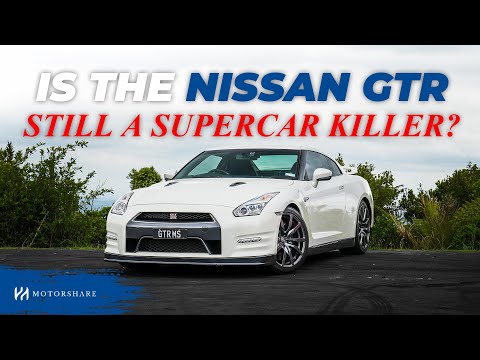
Watch the MotorShare Nissan GT-R R35 video on YouTube, or explore the GT-R R35 on MotorShare.
GT Academy: From a PlayStation Controller to Le Mans
But Gran Turismo's connection to the real world didn't stop with Nissan's dashboard. In 2008, Nissan and PlayStation launched GT Academy, a competition built around a question that every racing-game enthusiast has probably wondered about: could an exceptionally talented Gran Turismo player become a genuinely successful racing driver? The programme took the best virtual racers through real-world assessments, physical training and motorsport development, with the ultimate goal of producing professional drivers.
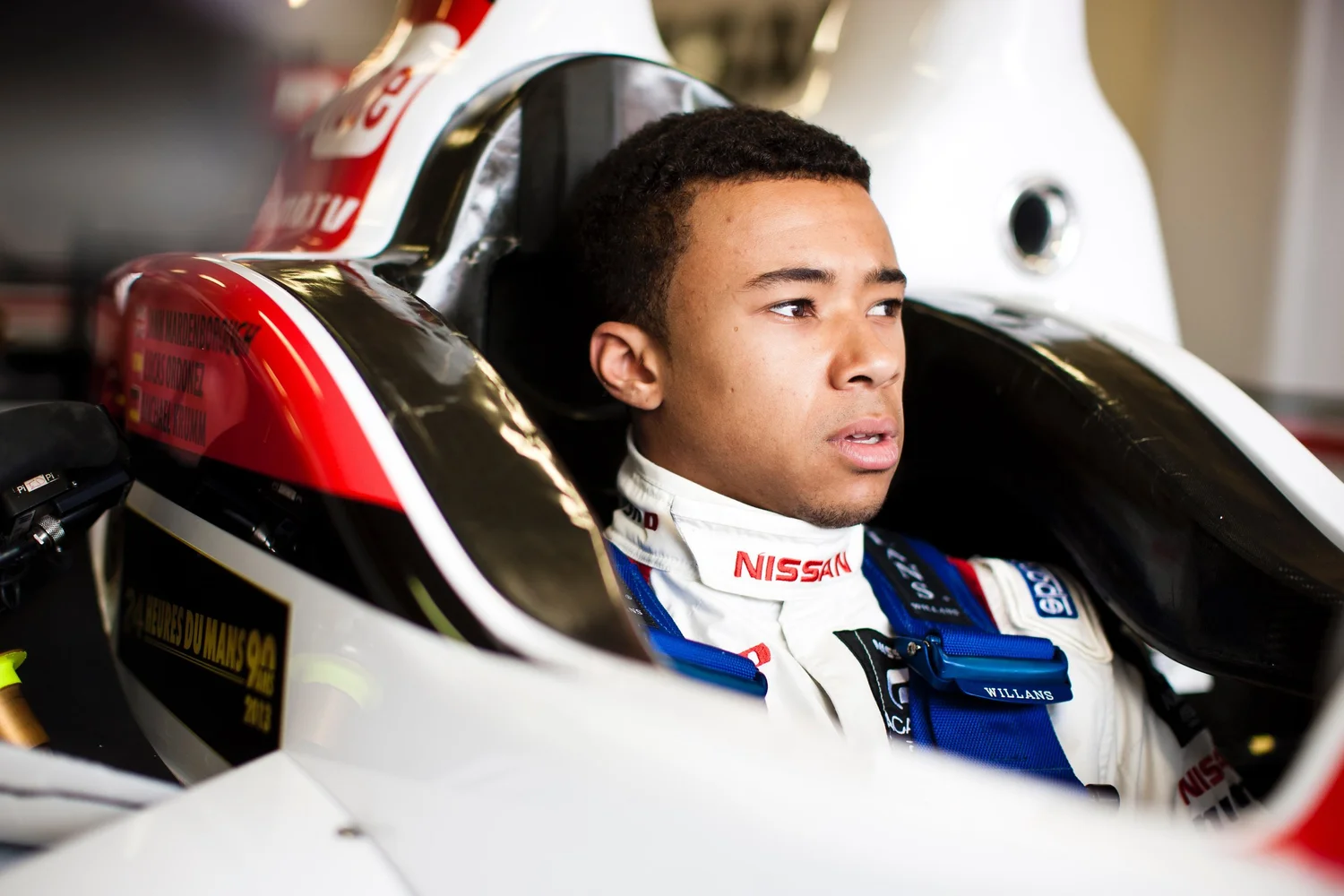
One of the most remarkable graduates was Jann Mardenborough, who won GT Academy in 2011. Unlike many racing drivers who spend their childhoods travelling around international karting championships, much of Mardenborough's early experience came from video games. After winning the competition, he moved into real motorsport and eventually secured an LMP2 class podium at the 2013 24 Hours of Le Mans. That's a player going from racing on a PlayStation to standing on the podium at one of the world's most prestigious endurance races. If someone had pitched that as a fictional storyline in the 1990s, it might have sounded a little ridiculous.
Of course, being fast in a simulator doesn't automatically make someone a professional driver. The physical forces, danger, racecraft and endurance required in real motorsport can't be entirely recreated with a controller. But GT Academy proved that virtual racing could identify genuine talent, including people who might never have had the money to follow the traditional path into motorsport. Mardenborough's story even inspired the 2023 Gran Turismo film, although the real-life achievements are fascinating enough without any Hollywood embellishment.
More Than a Racing Game
After nearly three decades, Gran Turismo's greatest achievement might not be its sales figures, graphics or even the professional drivers it helped discover. It might simply be the way it made millions of people fall in love with cars. For an entire generation, Gran Turismo was where they first discovered the Nissan Skyline GT-R, Mazda RX-7, Honda NSX, Toyota Supra, Porsche 911 and countless machines they had never seen in real life. It taught them the difference between drivetrain layouts, the importance of suspension and why a well-balanced car can sometimes be more enjoyable than a more powerful one.
And perhaps that's why the franchise remains so special. While other racing games concentrated on the fastest or most expensive vehicles, Gran Turismo made ordinary cars interesting too. A second-hand Japanese hatchback could be the beginning of a personal adventure, while a strange racing prototype could become your favourite car even if you had never heard of it before. It made the automotive world feel enormous, accessible and full of things worth discovering.
From Gran Turismo to the Real Road
There's a particular moment when you finally experience a car you've admired for years. You might know its horsepower, engine layout and every detail of its design, but none of that quite prepares you for hearing the engine start or feeling the car respond from behind the wheel. It's the difference between understanding a car and experiencing it.
For enthusiasts in New Zealand, MotorShare offers the opportunity to explore that side of automotive culture through an exceptional collection of luxury and performance vehicles. From the precision of a Porsche 911 Carrera S to the performance of a Ferrari 488 or the unmistakable character of the Nissan GT-R R35, these are exactly the kinds of machines that generations of Gran Turismo players have spent countless hours admiring on screen.
Through luxury car rental in Auckland, private memberships and curated experiences with Luxury Drives, MotorShare brings some of those automotive dreams into the real world. And unlike Gran Turismo, you won't need to spend hundreds of hours collecting virtual credits first.
From a simulator Sony wasn't initially convinced about to a franchise that helped design a real Nissan GT-R, introduced millions of people to automotive culture and turned video game players into professional racing drivers, Gran Turismo has become something far bigger than a game. It's a genuine piece of automotive history, and judging by all these stories, the cars were only ever half the adventure.
Ready to make your own driving memories? Discover MotorShare's Nissan GT-R R35 or explore the full MotorShare performance car fleet in Auckland.
Posts that might interest you

New Zealand's premier destination for luxury, exotic and performance car hire, membership and ownership.


Google Rating
See all our reviews
Head Office
888 Great South Road, Penrose, Auckland
Google Rating
See all our reviews


Download our app


Premium & Insured
All vehicles fully insured for your peace of mind.
Flexible Hire Options
Hourly, daily or long term to suit your plans.
Delivery Available
Airport or city delivery across Auckland.
24/7 Concierge
Our team is here when you need us.
© Copyright 2026 MotorShare Holdings Ltd.




NZTA Licensed
100% Kiwi Owned